
KHELOVIP Privacy Policy: How Your Data Is Protected and Used
Khelovip game Privacy policies have a reputation for being dense, legalistic documents that most people scroll past without reading. That is understandable, but it is also risky. When you create an account on a gaming or entertainment platform, you are handing over personal information — your name, your contact details, your device data, and sometimes payment information. Knowing how that information is handled is not just a formality; it is part of using the service responsibly.
The KheloVIP Privacy Policy is the document that explains exactly how the platform collects, uses, stores, and protects the data of its users. This article breaks that policy down into plain English, section by section, so you can understand what you are agreeing to when you sign up, what control you have over your own information, and what steps to take if you have questions or concerns. It is written as an informative companion to the official policy — not a replacement for it — and it is intended to help you make informed decisions about your account.
KHELOVIP Privacy Policy: An Overview

Your privacy is our priority at KHELOVIP.
At its core, the KheloVIP Privacy Policy is a transparency document. It exists to answer a simple question: when you use the platform, what happens to your personal information? The policy sets out the categories of data that may be collected, the reasons that data is needed, the circumstances under which it might be shared with third parties, and the rights you retain over your own information.
Like most modern digital platforms, KheloVIP operates in a landscape shaped by data protection regulations. Depending on where you are located, laws such as the General Data Protection Regulation (GDPR) in Europe, various national privacy acts, and regional consumer protection rules may influence how your data must be handled. A well-drafted privacy policy reflects these obligations by describing, in clear terms, the lawful basis for processing data, how long it is retained, and how users can exercise control over it.
One important point to understand up front is the difference between the privacy policy and the platform’s terms of service. The terms of service govern how you are allowed to use the platform — account rules, eligibility, conduct expectations, and so on. The privacy policy, by contrast, focuses exclusively on data. It explains what is collected and why, rather than what you are permitted to do. Both documents work together, but they serve distinct purposes, and reading the privacy policy on its own gives you a clear picture of the data relationship between you and the platform.
Another key concept in any privacy policy is consent. When you register an account and tick the relevant box or click the relevant button, you are typically acknowledging that you have read and understood how your data will be handled. That is why taking a few minutes to actually read the policy matters: consent given without understanding is not meaningful consent. The overview sections of the KheloVIP policy are designed to give you that high-level understanding before you dive into the specifics.
Finally, it is worth noting that privacy policies are living documents. Platforms evolve, regulations change, and new features introduce new data practices. A responsible platform updates its policy when these changes occur and notifies users in an appropriate way. Keeping an eye on the “last updated” date at the top of the policy is a simple habit that helps you stay informed.
>>> Read: KHELOVIP PROMOTION: Claim Bonuses, Codes, and VIP Rewards
Information KHELOVIP Collects About You

We collect only the information needed to provide our services.
The KheloVIP Privacy Policy typically organizes the data it collects into several broad categories. Understanding these categories helps you see the full picture of your digital footprint on the platform.
The first category is information you provide directly. This includes the details you enter when you register an account, such as your name, username, email address, phone number, and date of birth. If the platform offers any form of identity verification — which is common in gaming and entertainment contexts for age assurance and regulatory compliance — you may also be asked to provide government-issued identification or similar documents. If you contact customer support, the contents of those communications, including any attachments, may also be stored.
The second category is information collected automatically. When you visit a website or use an app, technical data is generated as a byproduct of that interaction. This can include your IP address, device type and model, operating system and version, browser type, language settings, screen resolution, and the pages or features you interact with. It may also include timestamps of your visits, the referring URL that brought you to the platform, and general location data derived from your IP address (such as country or city level — not precise GPS coordinates unless you explicitly grant location permissions).
The third category is payment and transaction data. If the platform supports deposits, purchases, or withdrawals, the policy will describe what financial information is processed. In most cases, full payment card numbers are handled by third-party payment processors and are not stored directly by the platform; instead, the platform may retain transaction records, payment method types, amounts, and timestamps for accounting, dispute resolution, and compliance purposes.
The fourth category is information from third parties. If you sign in using a social media account or another identity provider, the platform may receive basic profile information from that provider, subject to your privacy settings there. Similarly, analytics providers, advertising partners, and fraud-prevention services may supply data that helps the platform operate securely.
The policy will also typically address cookies and similar tracking technologies. Cookies are small files stored on your device that help websites remember your preferences, keep you logged in, and measure how the site is used. The KheloVIP policy generally explains which categories of cookies are used — strictly necessary, functional, analytical, and marketing — and how you can manage them through your browser or a cookie consent tool. Understanding this section is particularly useful because it directly affects your browsing experience and your exposure to targeted advertising.
How KHELOVIP Uses Your Information
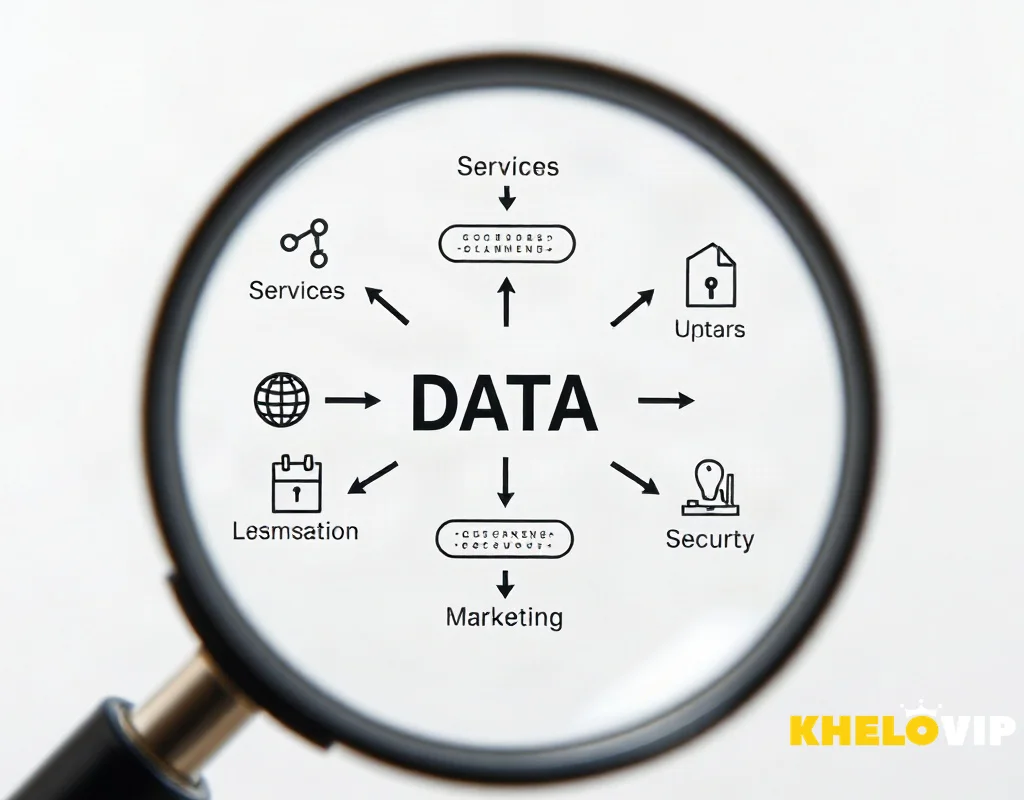
Your data helps us improve your experience and keep your account safe.
Collecting data is never an end in itself. The privacy policy explains the specific purposes for which your information is used, and those purposes are generally grouped into a handful of practical categories.
The first purpose is providing and operating the service. Your account details are used to create and maintain your profile, authenticate your login, personalize your experience, and ensure that the features you use function correctly. Without basic account data, the platform simply could not deliver its core service to you as an individual rather than an anonymous visitor.
The second purpose is security and fraud prevention. This is one of the most important uses of data in any gaming or entertainment platform. Information such as device identifiers, IP addresses, and behavioural patterns helps the platform detect suspicious activity — for example, multiple accounts operated by one person, automated bot behaviour, or unauthorized access attempts. Fraud prevention protects not only the platform but also its users, whose accounts and balances could otherwise be at risk.
The third purpose is legal and regulatory compliance. Depending on the jurisdiction, platforms may be required to verify user age, retain transaction records for specified periods, comply with anti-money-laundering rules, or respond to lawful requests from authorities. The privacy policy typically explains that data may be processed where necessary to meet these obligations, and it is important to understand that these uses are not optional — they are mandated by law.
The fourth purpose is communication. If you provide an email address or phone number, the platform may use it to send service-related messages: account confirmations, password reset links, security alerts, and updates to the terms or privacy policy. With your consent where required, it may also send promotional communications about new features, offers, or events. Crucially, most policies explain how to opt out of marketing messages while continuing to receive essential service notifications.
The fifth purpose is analytics and improvement. Aggregated and statistical data helps the platform understand which features are popular, where users encounter friction, and how performance can be improved. This data is generally used in a way that does not directly identify you, or is de-identified before analysis.
Finally, data may be used for personalization and advertising. If the platform displays advertising or promotional content, your data may be used to make those messages more relevant. The policy should explain whether this involves third-party advertising networks and what choices you have, such as adjusting cookie preferences or device-level ad settings.
How KHELOVIP Protects and Shares Your Data

We never sell your data and only share it with trusted partners.
A privacy policy is only as credible as the protections it describes. The KheloVIP Privacy Policy outlines a combination of technical and organizational measures designed to keep your information safe.
On the technical side, these measures typically include encryption of data in transit using protocols such as HTTPS/TLS, encryption of sensitive data at rest, firewalls, intrusion detection systems, and access controls that limit which employees or systems can view personal data. On the organizational side, the platform may implement staff training, internal policies governing data handling, confidentiality agreements, and regular security reviews. No system is completely immune to risk, and honest policies acknowledge this while committing to reasonable and industry-standard safeguards.
The policy also explains when and with whom your data may be shared. Common categories of recipients include:
- Service providers and vendors. Third parties that perform functions on the platform’s behalf, such as cloud hosting, payment processing, customer support tools, analytics, and email delivery. These providers are typically bound by contracts that restrict them to using your data only for the agreed purpose.
- Business partners. In some cases, data may be shared with partners for joint promotions or integrated features, generally only with your consent or where you have opted in.
- Legal and regulatory authorities. Data may be disclosed when required by law, court order, or a valid legal request, or when necessary to protect the rights, safety, or property of the platform, its users, or the public.
- Corporate transactions. If the platform is involved in a merger, acquisition, or sale of assets, user data may be transferred as part of that transaction, usually with continued protection under a successor policy.
A well-written policy also addresses data retention and international transfers. Retention rules specify how long different types of data are kept — for example, account data for as long as your account is active, and transaction records for the period required by financial regulations. International transfer clauses explain that data may be processed in countries other than your own, and describe the safeguards (such as standard contractual clauses) used to protect it when it crosses borders.
Your Rights and Choices Under the Privacy Policy

You have control over your personal information.
One of the most empowering sections of any privacy policy is the one dealing with user rights. Depending on your location, you may have some or all of the following rights over your personal data.
The right to access. You can request a copy of the personal information the platform holds about you, along with details about how it is used and shared. This is often called a subject access request.
The right to correction. If any of your information is inaccurate or incomplete, you can ask for it to be corrected. Keeping your account details up to date is a shared responsibility — the platform stores the data, but you know best when it changes.
The right to deletion. In certain circumstances, you can request that your personal data be erased. This right is not absolute; the platform may need to retain some information to comply with legal obligations, resolve disputes, or enforce agreements. A deletion request typically results in the closure or anonymization of your account, and it is worth understanding the consequences before proceeding.
The right to restrict or object to processing. You can ask the platform to limit how it uses your data, or object to certain uses such as direct marketing. Objecting to marketing is usually straightforward and does not affect your ability to use the core service.
The right to data portability. Where processing is based on consent or contract and carried out by automated means, you may be entitled to receive your data in a structured, commonly used, machine-readable format, and to request that it be transferred to another provider where technically feasible.
The right to withdraw consent. If processing is based on your consent, you can withdraw it at any time. Withdrawal does not affect the lawfulness of processing carried out before the withdrawal.
The right to lodge a complaint. If you believe your data has been mishandled, you generally have the right to complain to a data protection authority in your country or region.
Beyond formal rights, the policy usually describes practical choices: managing cookie preferences, adjusting notification settings, updating your profile, and closing your account. Exercising these choices is typically done through account settings or by contacting the platform’s privacy team. It is a good practice to keep records of any requests you make and the responses you receive.
Policy Updates and How to Contact KHELOVIP

Stay informed about policy changes and reach out with any questions.
No privacy policy stays static forever. The final sections of the KheloVIP Privacy Policy typically explain how updates are handled and how you can reach the platform with privacy-related questions or requests.
When the policy changes, the platform will usually post the revised version with a new “effective” or “last updated” date. For significant changes — particularly those that expand how data is collected or shared — many platforms commit to additional notice, such as an email to registered users or an in-app banner. Continuing to use the service after an update generally indicates acceptance of the revised policy, which is why it is wise to review changes rather than dismiss them.
The contact section provides the channels through which you can exercise your rights or raise concerns. Typical options include:
- A dedicated privacy email address (often something like privacy@ or support@ on the platform’s domain)
- A contact form or support ticket system within the app or website
- A postal address for formal written requests
- Details of the platform’s data protection officer, where one is appointed
When you contact the platform, being specific helps. Include your account details, a clear description of your request (for example, “I would like a copy of my personal data” or “Please correct my email address”), and any relevant dates. Most policies state a response timeline, often within 30 days, though complex requests may take longer with notification.
If you are not satisfied with the response, the policy should point you toward the relevant supervisory authority. In many jurisdictions, you have the right to escalate a complaint to a national data protection regulator.
Privacy is ultimately a partnership. The platform commits to transparency and safeguards; you contribute by reading the policy, managing your settings, and speaking up when something seems wrong. A few minutes spent understanding the KheloVIP Privacy Policy — what is collected, why, how it is protected, and what rights you hold — is a small investment that pays off in greater control over your own digital life. Always refer to the official policy published on the platform for the most current and authoritative terms, as this article is an educational overview rather than legal advice.